
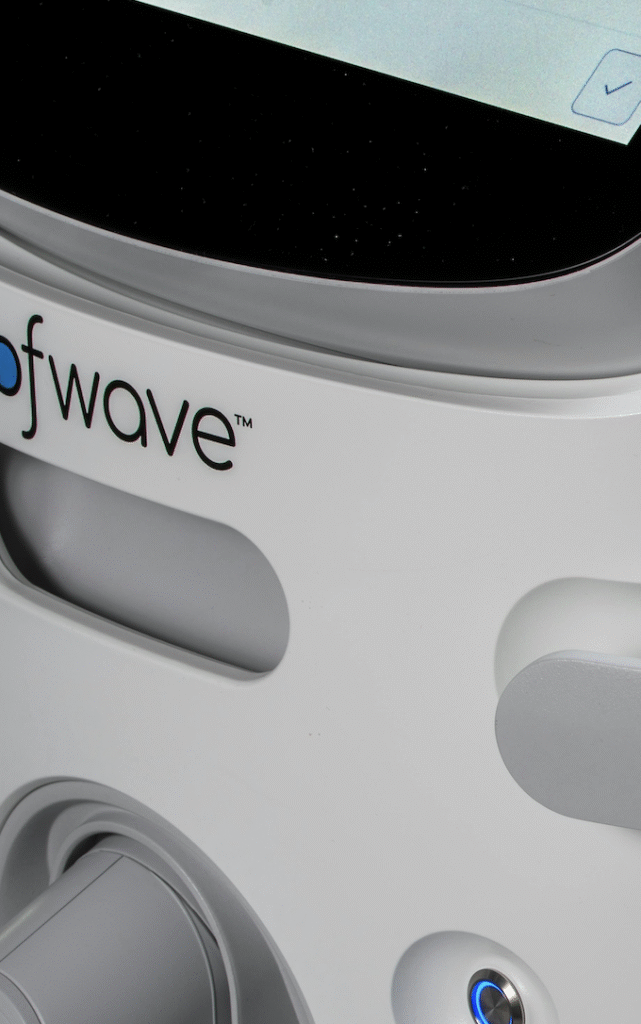
Non-invasive Skin Tightening
Non-invasive skin tightening is fast becoming a popular treatment for those visiting aesthetic clinics. Going from working in different areas around London like Knightsbridge and Victoria to now owning my own aesthetic and skin clinic in North West London, I have noticed the increased demand for these types of treatments, as clients want subtle, natural lifting with very little downtime.
HIFU VS Sofwave
Two devices that are often compared when it comes to non-invasive skin tightening are HIFU and Sofwave. Having worked with both devices, I have a unique insight into the subtle differences between the two and, as a result, have chosen Sofwave as the device to use in my own clinic.
Skin-Lifting: HIFU V Sofwave
If you are someone who is looking for a treatment that will boost collagen stores, improve skin texture, and cause lifting and tightening effects, then Google may have thrown the names of these two devices at you. But to understand which is going to give you the best ROI, you need to understand the subtle differences between the two, and I hope you will by the end of this article.
What Is HIFU Skin Tightening?
HIFU stands for High Intensity Focused Ultrasound. Let’s break it down: “High-intensity” means the ultrasound energy is delivered at a level strong enough to produce a biological effect. “Focused” means the energy can be precisely concentrated on a specific tissue. When the targeted tissue absorbs this energy, the cells vibrate rapidly, generating heat. This heat then damages and destroys the targeted tissue. The body then works to repair itself in the areas where the damage has occurred, and as a result of doing this, it lays down new, fresh collagen and causes tissue tightening. Have you ever noticed after you have a cut, as the cut is repairing itself, the tissue around the cut feels tight? Well, this is what these treatments are mimicking to cause a lift.
What Is Sofwave Skin Tightening?
Sofwave works slightly differently. Although it uses ultrasound, it is at a lower intensity. In the same way, ultrasound waves reach the targeted area, but instead it gently heats the relevant skin layer to stimulate collagen production without destroying the surface or other surrounding cells and structures.
Sofwave vs HIFU: Key Differences
So that is comparing how both devices use ultrasound energy, but in different ways. There are some other key differences. HIFU has the ability to work at multiple depths, and this deeper penetration, although great for lifting, can damage surrounding tissues like fat and muscle.
Sofwave can only reach as deep as the mid-dermal layer, the middle layer of your skin where collagen and elastin live. Because it doesn’t affect fat or muscle, it won’t affect your natural facial volume.
Because of this, HIFU is very much dependent on the operator, and if not experienced, clients can leave with facial volume loss. Because the energy is localised with Sofwave, the results are more predictable and natural-looking, as there is no risk of the surrounding fat being destroyed.
Which Skin Tightening Treatment Is Better?
So, which one should you go for? This is where it is very important to have a consultation with someone who will be open and honest and can also align what your views, goals, and beliefs are with what they recommend. If you are someone who has severe laxity but are also worried about volume loss, then this needs to be balanced by the fact that Sofwave will give you some tightening without the volume loss but will not achieve a sharp jawline which you may be imagining after the treatment.
So if I were to simplify the decision process, I would start with having the below in mind.
Age
Sofwave is often well suited for patients in their late 20s to 50s who are beginning to notice early signs of skin laxity and want to maintain firmness and collagen levels. HIFU may be considered in some older patients with more advanced skin laxity who require deeper structural tightening. However, age alone is not the deciding factor — skin condition is more important than chronological age.
Skin Laxity
For mild to moderate skin laxity, Sofwave typically provides excellent tightening and smoothing with natural-looking results. HIFU may be appropriate in cases of moderate to severe laxity where deeper lifting is required. That said, deeper treatment is not always better, especially if volume preservation is a priority.
Treatment Area
Sofwave is particularly effective for the face, jawline, neck, and areas where skin quality and texture are the main concerns. It is also suitable for delicate zones such as the under-eye area. HIFU is sometimes used for deeper lifting in areas such as the lower face and neck but may be less predictable in thinner or more delicate regions.
Desired Results
Patients seeking subtle, gradual tightening with improved skin quality often prefer Sofwave. It is ideal for those wanting to look refreshed rather than dramatically altered. HIFU may appeal to patients looking for a stronger lifting effect, understanding that results can be more variable.
Tolerance for Downtime
Sofwave involves minimal discomfort and essentially no downtime, allowing patients to return to normal activities immediately. HIFU can be more uncomfortable and may cause temporary tenderness or sensitivity after treatment, which some patients find limiting.
As previously mentioned, a thorough consultation with a clinician who truly understands where you are in your aesthetic journey is essential. Everyone feels differently about cosmetic treatments; some clients are excited, while others feel nervous about taking the first step. Having a practitioner who listens, understands your concerns, and does not bombard you with unnecessary treatments or products is key to feeling comfortable and confident. This supportive, personalised approach helps guide you through the decision-making process and ensures any treatment chosen aligns with your goals, values, and comfort level.
Sofwave Skin Tightening in London
When it comes to aesthetics, there are different schools of thought. Some clinicians enjoy creating dramatic, plump, and heavily filled results, while others are comfortable significantly altering or augmenting features, even in younger clients.
My personal approach at Skin by Dr. Y, and the foundation of my practice, is to protect and enhance your natural features, not change them. I focus on treatments that refresh the face, improve skin quality, and support the skin as it ages, so that the aging process feels graceful, confident, and embraced rather than feared.
I want my clients to look and feel like the best version of themselves at every stage of life, not a different version of themselves. Sofwave
Sofwave aligns with these goals, and so it is the treatment I chose to provide at my London skin clinic in Hampstead, Skin by Dr Y. If you would like to have an open discussion about whether this treatment is suitable for you, I invite you to book a consultation.
Frequently Asked Questions (FAQS) About Sofwave Skin Tightening
What is Sofwave Skin Tightening:
Sofwave is a non-invasive treatment, meaning there is no injury to the surface of the skin. It uses ultrasound waves which are delivered to the middle layer of your skin and stimulates collagen production to improve firmness, texture, and mild to moderate skin laxity without damaging the skin surface or underlying fat. So no risk of volume loss in the face.
How is Sofwave different from HIFU?
Sofwave heats the mid-dermis to stimulate collagen safely and predictably, while HIFU delivers higher-intensity focused ultrasound at deeper levels, which can sometimes affect fat and muscle. Sofwave is generally chosen if you are looking for natural-looking results and want to preserve volume.
Does Sofwave cause facial fat loss?
No. Sofwave’s energy is targetted and localised so it does not affect the fat layer, which is why it is popular for patients who want skin tightening without risking volume loss or facial hollowing.
Is Sofwave painful?
Sofwave can cause some discomfort during treatment. At Skin By Dr Y, a topical anaesthetic is applied beforehand to maximise comfort, and for patients who are more sensitive, a nerve block can also be offered. Mild swelling and redness may occur after treatment, but this usually settles within 48 hours. In more sensitive individuals, these effects can occasionally last up to 7 days.
How long does a Sofwave treatment take?
It is very much dependant on the number of areas treated, a full face and neck can take up to 1 hour.
Is there downtime and what aftercare should I follow?
As the treatment doesn’t injure the skin clients can resume normal activities after the treatment. Make-up can be applied post treatment if needed. Make sure to drink plenty of water after treatment and sunscreen is always advised.
When to expect results from Sofwave
Clients notice an initial improvement in their skin hydration and texture, for skin lifting and tightening gradually develop as new collagen is being produced and optimal results are around 8-12 weeks.
How many sessions do I need
It depends on amount of skin laxity and goals. Most clients are happy with their results after one treatment, other with more laxity can benefit from a repeat treatment at 4-6 months.
What areas can be treated?
Sofwave is safe to be used on any part of the body where there is lose or crepey skin. Common areas include full face, neck and under eye area but stomach, thighs, buttocks for cellulite and underarms are also common areas for treatment
Can Sofwave be combined with other treatments?
Yes. Sofwave can be combined with injectables, skin boosters, microneedling, or laser treatments as part of a personalised plan to help achieve aesthetic goals.
Is Sofwave better than HIFU?
Neither is universally “better” so the best choice depends on your skin condition, goals, and tolerance for risk. Sofwave is often preferred for predictable, natural tightening without volume loss but a consultation is strongly recommended to understand what treatment is right for you.
