
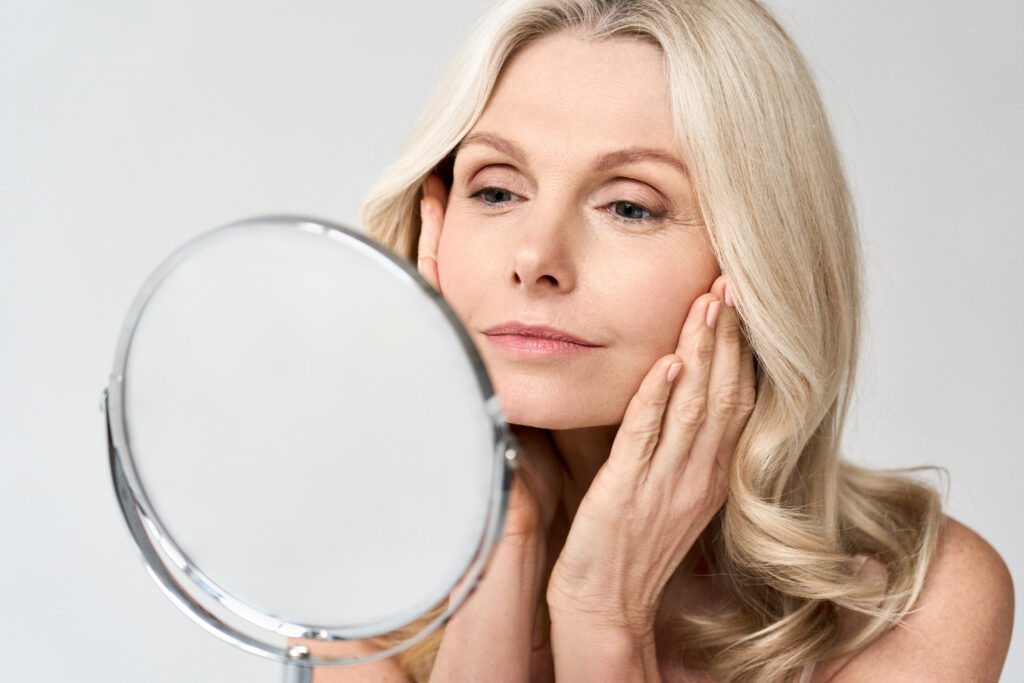
We all know ageing is a part of life and is inevitable. I actually believe that ageing is a privilege. I consciously move away from the messaging we so often see on social media with flashing titles such as “How to stop ageing” or “Reverse ageing”, because these set unrealistic expectations and goals.
Rather than focusing on looking younger or trying to reverse ageing, I believe the real aim when it comes to medical aesthetics should be to understand what is happening beneath the skin. When we understand these changes, we can better support and care for our skin through the different stages of life, allowing it to age gracefully.
The aim in my clinic, Skin by Dr Y, is to equip clients with the knowledge and treatments that help them do exactly this, using evidence-based skin treatments that support collagen induction and improve overall skin quality.
What happens to skin in your 40s
Collagen
One of the big processes that occur as we age is the reduction in collagen and elastin production. These two are key factors when it comes to skin elasticity, skin thickness and skin barrier as it affects the support and structural integrity of the skin.
Low cell turnover
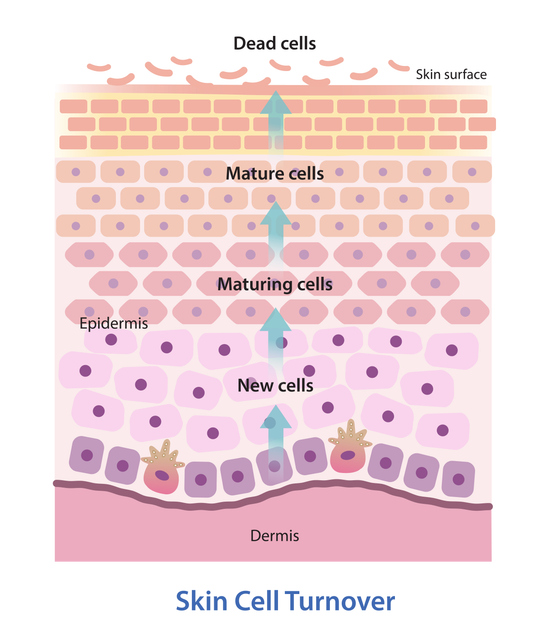
As you age, around your 40s you skin cell turnover reduces. New fresh cells make their way to the surface and when you are young this takes around 28 days, in your 40s this increases to 50 days meaning old, sluggish dead cells are staying on the surface for longer. As a results you get dull, patchy skin
Fat pad loss
There is a subtle loss of the facial fat pads, which physically shows up as volume loss, primarily in the mid-face. As the mid-face starts to descend, nasolabial lines (creases that run from the sides of the nose down to the corners of the mouth) become more prominent, and jowling can occur.
Hormonal and lifestyle changes
Your 40s are often a stage of life where you are juggling multiple demands at once — home life, work, children, ongoing stress, and often a lack of sleep. All of this has a cumulative impact on skin changes in your 40s.
At the same time, significant hormonal changes are taking place. Post-pregnancy changes and, for some women in their later 40s, the early stages of menopause can further affect the skin. These hormonal shifts accelerate collagen loss and play a role in pigmentation concerns such as sun damage and melasma, as well as reduced skin hydration and overall skin quality.
Skin quality vs anti-ageing
Most people define anti-ageing as looking younger. But in medical aesthetics, and in my practice at my London skin clinic in Hampstead, the focus is on skin quality.
Skin quality refers to the condition and health of the skin regardless of age. You can have a 30-year-old with poor skin quality and a 50-year-old with excellent skin quality. When assessing skin quality, we look at dehydration lines, pigmentation evenness, and texture — smooth versus rough skin.
To improve skin quality, treatments should focus on collagen stimulation, improving cell turnover and hydration, and targeting skin cells to help reset abnormal pigmentation signalling.
A common mistake is focusing on replacing volume loss without addressing skin quality. For anyone looking to appear refreshed and youthful while still looking natural, improving overall skin health is essential.
What doesn’t work (and why)
Injectable treatments such as botulinum toxin and dermal fillers are excellent options when introduced for the right client, at the right time, and for the right indication. Used appropriately, they can be powerful tools within a broader medical aesthetics approach focused on long-term skin health and healthy ageing.
However, when the focus is solely on replacing volume with fillers, results can begin to look less natural and still fail to deliver a truly refreshed appearance. This highlights the important distinction between skin quality vs fillers, as dermal fillers and skin quality are not the same thing.
If the skin remains dehydrated, inflamed, or collagen-depleted, clients may continue to experience fine lines, wrinkles, dullness, and poor skin texture despite injectable treatments. Without addressing skin quality, injectables alone cannot consistently deliver natural results, restore luminosity, or support skin hydration and resilience over time.
Treatments that actually improve skin quality
Medical-grade skincare (retinoids, antioxidants, barrier repair)
As you approach your 40s, it may be a good time to start investing in science-backed skincare treatments. Many products available off the shelf do not need strong evidence to support the claims they make, and marketing can often be misleading.
When it comes to improving skin quality in your 40s, medical-grade skincare such as tretinoin and vitamin C, prescribed and recommended by a doctor, can go a long way in supporting healthier, more resilient skin.
Microneedling (plus PRP)
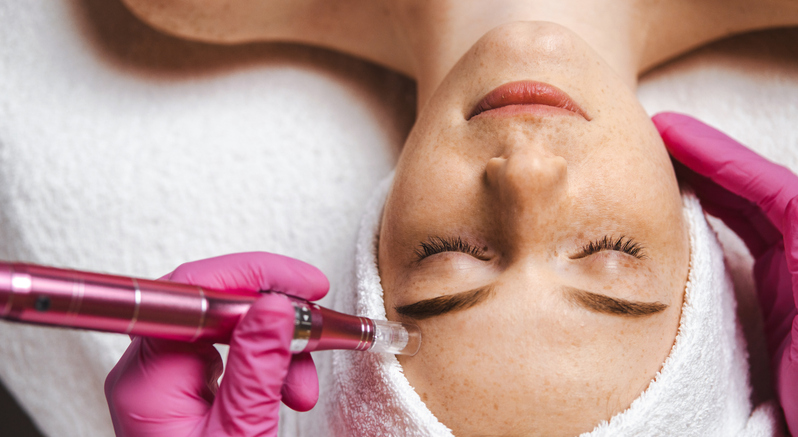
This is an excellent, low-risk, low-downtime treatment that can promote collagen production. It is ideal for those just starting their aesthetic journey, but also works well as a maintenance treatment, particularly when considering the return on results.
It is my go-to treatment for dull skin and for clients looking for a natural collagen induction therapy.
If you haven’t read my blog on why microneedling is underrated, you can read it here.
Energy-based collagen stimulation (Sofwave)
There are many energy-based devices used for collagen stimulation, including Morpheus8, CO₂ lasers, and HIFU, all of which have their own advantages and limitations.
In my practice, I have chosen to work with Sofwave for non-invasive skin tightening in Hampstead, an ultrasound-based energy device ideal for skin tightening and lifting. One of the main reasons for this decision is the clinical evidence demonstrating effective collagen stimulation without the risk of volume loss that can sometimes be seen with other energy-based treatments.
Another important factor is downtime. As Sofwave does not cause injury to the surface of the skin, recovery is minimal, and in most cases only a single treatment session is required. For my clients seeking skin tightening in Hampstead who lead busy, client-facing lives, this is particularly important.
How I approach this at Skin by Dr Y
I have found my place in medical aesthetics as a doctor who focuses on natural aesthetic results and long-term skin health. My approach centres around treatments that support collagen induction and genuinely improve skin quality, rather than chasing quick fixes.
I often recommend therapies that work gradually and consistently, because clients who commit to long-term treatment plans achieve the most natural and sustainable outcomes. It very much reflects a slow-and-steady-wins-the-race philosophy.
I don’t tend to treat clients who are looking for instant results or one-off solutions. My aim is to help both men and women achieve skin that looks healthy, resilient, and full of vitality — skin that reflects good function as well as good aesthetics.
As a doctor-led skin clinic in Hampstead, London, my priority is always to support the skin at a cellular level using evidence-based treatments that improve how the skin behaves over time, not just how it looks on the day.
FAQ’s Frequently Asked Questions
Skin quality refers to the overall health and function of your skin. From a doctor’s perspective, this includes hydration, elasticity, texture, tone evenness, and the skin’s ability to repair and regenerate itself. Good skin quality can be achieved at any age and is the foundation of natural, healthy-looking skin.
Skin quality declines more noticeably in your 40s because collagen production slows, skin cell turnover becomes less efficient, and hormonal changes begin to affect hydration and pigmentation. When combined with lifestyle factors such as stress, poor sleep, and cumulative sun exposure, this can lead to dull skin, fine lines, uneven tone, and reduced skin resilience.
Medical-grade skincare can significantly support skin health, but skincare alone is often not enough to stimulate collagen or reverse deeper skin changes in your 40s. In many cases, in-clinic treatments such as microneedling for collagen induction, Sculptra, and Sofwave for non-invasive skin tightening are needed alongside skincare to achieve meaningful and long-lasting improvements.
The best treatments for improving skin quality in your 40s are those that stimulate collagen, improve cell turnover, and support hydration. These include microneedling, injectable skin boosters, biostimulatory treatments, and carefully selected energy-based devices that promote collagen production without damaging the skin surface.
Skin quality treatments work gradually rather than instantly. Improvements are often noticeable within a few weeks, with continued benefits developing over several months as new collagen forms. While results are not immediate like Botox or fillers, they tend to look more natural and are longer-lasting.
A doctor-led approach to improving skin quality focuses on identifying the underlying causes of skin changes and using evidence-based medical treatments to address them. Rather than following trends or quick fixes, the emphasis is on safety, long-term skin health, and natural aesthetic results.
A doctor-led skin clinic is best suited for individuals who value natural results, prioritise skin health, and are willing to commit to long-term improvement rather than one-off cosmetic treatments. This approach focuses on how the skin functions, not just how it looks on the day.
Skin by Dr Y is ideal for clients seeking a doctor-led skin clinic in Hampstead, London, with a medical aesthetics approach focused on improving skin quality rather than quick cosmetic fixes. It particularly suits individuals committed to evidence-based skin treatments that stimulate collagen and elastin, improve hydration, and enhance overall skin tone and texture.
Clients who understand that healthy, resilient skin takes time and consistency tend to benefit most. This approach is designed for those who value long-term skin health, natural-looking results, and a structured treatment plan tailored to how the skin changes over time.
