
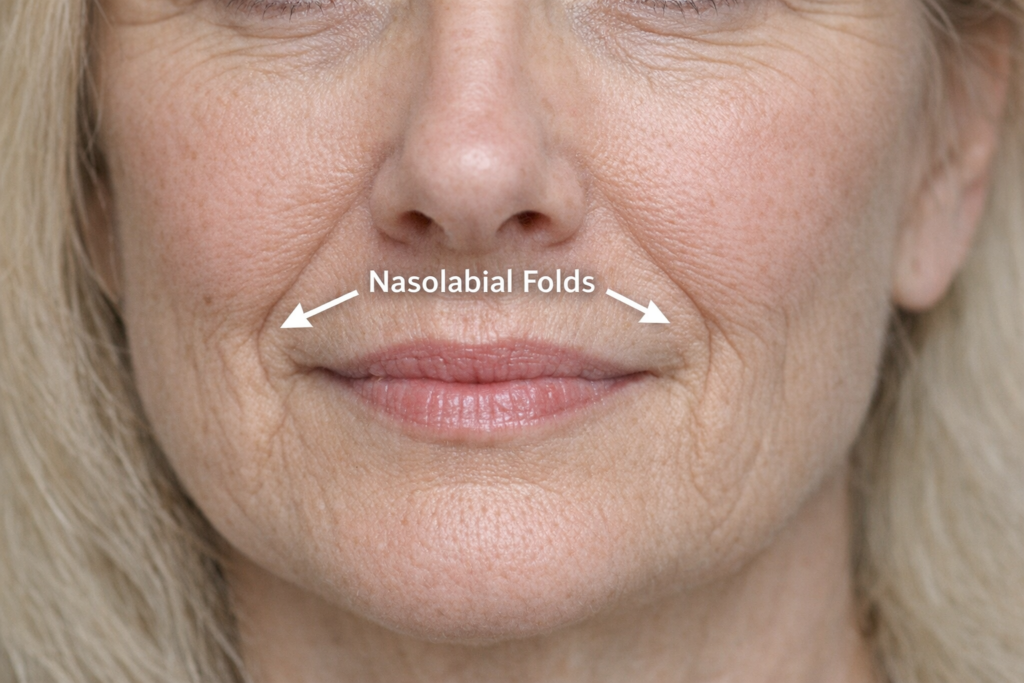
Nasolabial folds often referred to as smile lines are the lines that run from the sides of the nose to the corners of the mouth. While they are a natural part of facial anatomy, many people notice these folds becoming deeper at rest over time.
At Skin by Dr Y, many clients visiting the clinic from Hampstead, Belsize Park, Swiss Cottage, St John’s Wood and across North West London ask about the most natural way to treat nasolabial folds.
The aim of treatment is not to erase natural facial movement, but to soften the folds in a way that restores balance to the face and creates a subtle, refreshed appearance.
As a doctor-led aesthetic clinic in Hampstead, the focus is always on natural results, collagen support and facial harmony, rather than over-filling lines.
What Is the Best Treatment for Nasolabial Folds?
The best treatment for nasolabial folds depends on the cause of the fold. In many patients, these lines deepen because of loss of cheek support and collagen, rather than the fold itself. Treatments such as dermal fillers, collagen-stimulating injectables, and ultrasound skin tightening can restore facial structure and soften the folds while maintaining a natural, refreshed look.
Why Nasolabial Folds Become More Visible
Nasolabial folds tend to deepen with age due to several natural processes within the skin and facial structure.
Common causes include:
• reduction in collagen production
• gradual loss of cheek volume
• downward movement of facial fat pads
• skin laxity and reduced elasticity
• repeated facial expression
• rapid weight loss or changes in facial fat distribution (for those clients using GLP1 weight injection this can be common)
Because of this, treating the fold alone is often not the most natural solution. A more balanced approach focuses on supporting the mid-face and improving skin quality first.
Treatment Options for Nasolabial Folds
Treatment plans at Skin by Dr Y are personalised following a consultation and facial assessment.
Depending on the cause of the fold, treatments may include the following.
Dermal Fillers for Nasolabial Folds
Dermal fillers are used in aesthetics to replace volume or fill lines. They can soften deeper nasolabial folds by restoring volume and hydration but in my personal experience to get the most natural results it is more effective to invest in treatments that support the mid face (cheek) structure so that the anatomy is lifted and the folds are softened.
This way of treating nasolabial folds allows to reduce the amount of filler that is then required to treat the folds directly. Too much filler can cause overfilling, puffiness and an unnatural facial expression when smiling etc.
Benefits of treating with dermal fillers include:• immediate improvement
• natural-looking results
• minimal downtime
Collagen-Stimulating Treatments
For those who prefer a more regenerative approach, collagen-stimulating treatments can improve nasolabial folds gradually.
These treatments encourage the skin to produce new collagen, improving skin thickness and elasticity over time.
Examples include:
- advanced microneedling
- biostimulator treatments (Sculptra)
- regenerative boosters
These treatments are popular with client seeking longer-term improvement in skin quality but I would also recommend these treatments in combination with fillers to help the quality of the skin.
Ultrasound Skin Tightening
Ultrasound skin tightening treatments such as Sofwave stimulate collagen deeper within the skin, improving firmness and mild skin laxity.
This type of treatment is often suitable for patients who:
• are noticing early skin laxity
• want a non-injectable option
• prefer gradual natural improvement
Results develop gradually over several months as collagen production increases.
Doctor’s Insight: Why Nasolabial Folds Should Not Always Be Filled Directly
One of the most common misconceptions about nasolabial folds is that the line itself needs to be filled. In reality, the fold often becomes deeper because of changes in the mid-face rather than the fold itself.
As collagen levels decline and cheek support gradually reduces, the skin can fold more prominently between the nose and mouth. Simply filling the line may not address the underlying cause and in some cases can create heaviness in the lower face.
At Skin by Dr Y, treatment planning focuses on understanding the structural changes occurring in the face. Supporting the mid-face, improving skin quality and stimulating collagen can often soften nasolabial folds in a way that looks subtle, balanced and natural.
This approach allows patients to achieve a refreshed appearance without looking overfilled.
Nasolabial Fold Treatment in Hampstead
Patients often travel to the clinic from across North West London, including:
• Hampstead
• Belsize Park
• West Hampstead
• Primrose Hill
• Swiss Cottage
• St John’s Wood
Because the clinic is doctor-led, every treatment is carried out with a strong focus on safety, natural results and evidence-based practice.
Frequently Asked Questions FAQs
Nasolabial folds are a natural part of facial anatomy and may be present from a young age. However, they often become more noticeable in the late 30s or 40s as collagen levels decline and mid-face support gradually reduces.
Treatment longevity depends on the type of treatment used. High quality of hyaluronic acid fillers such as Juverderm and Teoxane typically last between 9 and 18 months. Combining this with collagen-stimulating treatments may last longer because they encourage the skin to produce its own collagen, which gradually improves skin structure.
When performed with careful technique and a full-face assessment, treatment should look subtle and natural. The aim is not to erase natural facial lines, but to soften them in a way that restores balance and creates a refreshed appearance.
Most treatments are well tolerated. Topical numbing cream and local anaesthetic are commonly used to minimise discomfort. Many patients describe the treatment as mild to moderately uncomfortable but manageable.
Most treatments involve minimal downtime. Mild swelling, redness or bruising can occur after injectable treatments and usually settles within a few days. Non-injectable treatments typically allow patients to return to normal activities immediately.
The most appropriate treatment depends on the underlying cause of the fold, including skin quality, facial structure and collagen support. A consultation allows a personalised treatment plan to be created based on these factors.
In many cases, yes. Nasolabial folds often appear deeper because of volume loss in the mid-face rather than the fold itself. Supporting the cheek structure can gently lift the area and soften the fold, which often produces a more natural result than filling the fold directly.
Yes. Significant weight loss can lead to a reduction in facial fat, which may reduce support in the mid-face and make nasolabial folds appear deeper. Treatments that restore structural support or stimulate collagen production can help improve this change.
