
HIFU and Sofwave are both non-surgical ultrasound treatments used to improve skin firmness and mild to moderate laxity. However, they do not deliver energy in exactly the same way, reach the same tissue depths or suit every face equally.
The most important difference is that many aesthetic HIFU devices can deliver focused ultrasound at several depths, while Sofwave is designed to heat the mid-dermis at approximately 1.5 mm. This means the right choice is not simply the treatment that reaches deepest. It is the one that best matches your skin quality, facial volume, degree of laxity and expectations.
This guide explains the practical differences between HIFU and Sofwave so you can ask better questions, recognise unrealistic claims and make a more informed decision before proceeding.
Neither HIFU nor Sofwave is automatically better for everyone.
HIFU may be considered when a clinician wants to deliver focused energy at deeper tissue levels, although devices, cartridges and treatment protocols vary considerably. Sofwave concentrates treatment within the mid-dermis, where it is intended to stimulate collagen while protecting the skin surface with integrated cooling.
In practical terms:
The safest decision begins with an examination of your skin and facial anatomy, not a treatment trend or a before-and-after photograph.
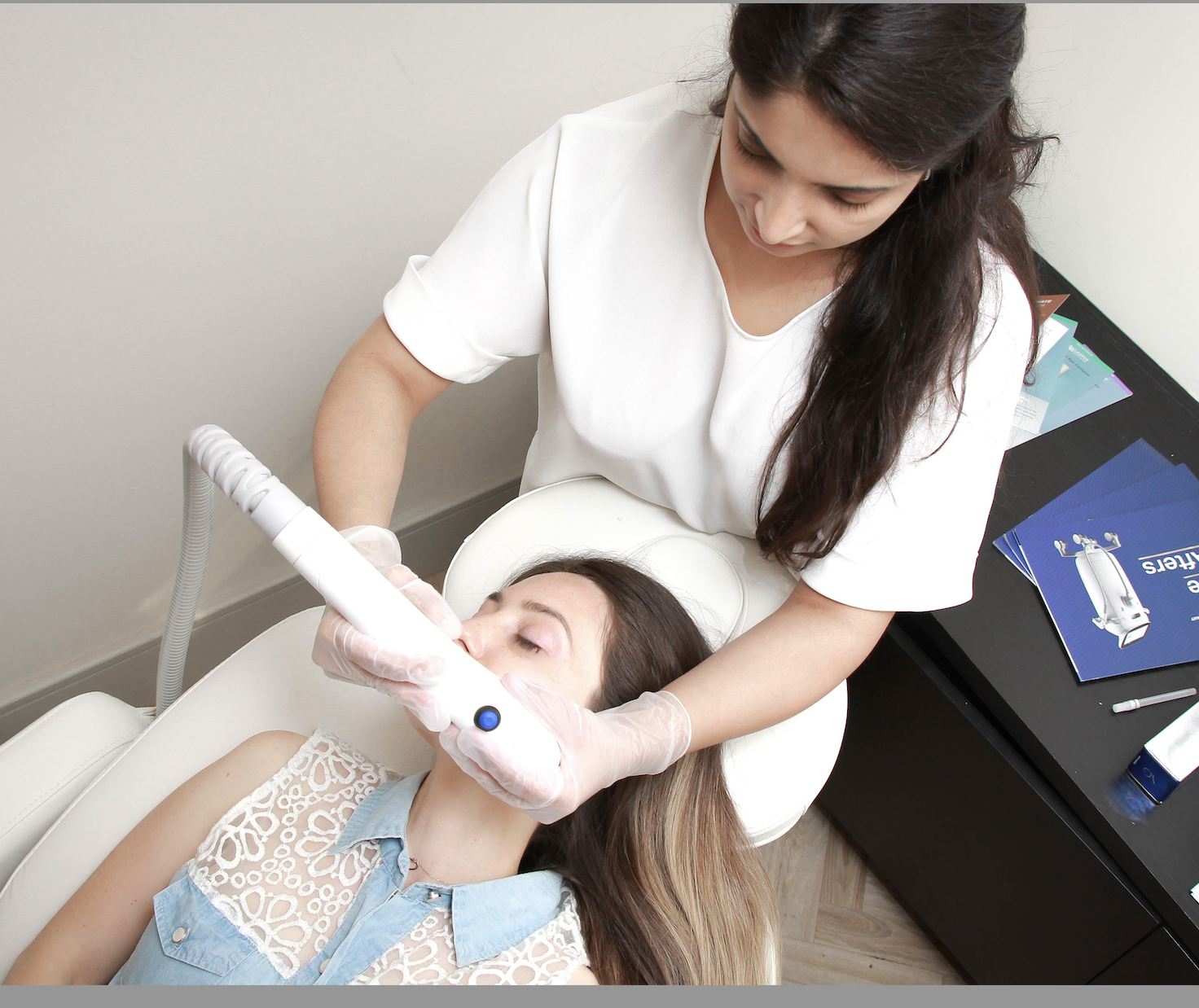
HIFU stands for high-intensity focused ultrasound. In aesthetic treatment, focused ultrasound energy is delivered beneath the surface of the skin to create controlled thermal points within selected tissue layers.
The resulting healing response can encourage collagen remodelling and tissue contraction over time. A systematic review and meta-analysis found that HIFU has been studied for face and neck rejuvenation, although the included studies varied in design, treatment protocols and outcome measurement.
Depending on the device and cartridge, aesthetic ultrasound may be delivered at different depths. This flexibility can be useful, but it also means the term “HIFU” does not describe one identical treatment.
Two clinics could both advertise HIFU while using different:
That is why comparing HIFU treatments by price alone can be misleading.
Sofwave is a branded, non-invasive ultrasound treatment that uses parallel ultrasound beams to generate controlled heat within the mid-dermis.
The manufacturer states that the treatment reaches approximately 1.5 mm into the skin and uses integrated cooling to protect the epidermis. Its intended purpose is to stimulate the skin’s regenerative response without breaking the surface.
Rather than adding volume, Sofwave focuses on improving skin firmness and supporting collagen renewal.
It is commonly discussed for concerns such as:
At Skin By Doctor Y, Sofwave is offered as a doctor-led option for people seeking gradual skin tightening with an emphasis on natural-looking rejuvenation. You can read more about the treatment, areas and current pricing on our Sofwave treatment page.
| Consideration | HIFU | Sofwave |
|---|---|---|
| Technology | Focused ultrasound | Synchronous parallel ultrasound beams |
| Treatment depth | Can vary by device and cartridge | Approximately 1.5 mm in the mid-dermis |
| Main objective | Collagen remodelling and tissue tightening at selected depths | Mid-dermal collagen stimulation and skin firming |
| Skin surface | Usually remains intact | Remains intact, with integrated surface cooling |
| Results | Develop gradually | Develop gradually |
| Downtime | Usually limited, but varies | Usually limited, but varies |
| Discomfort | Depends on device, depth, settings and individual sensitivity | Heat or discomfort may be felt during pulses |
| Best suited to | Depends on device, anatomy and degree of laxity | Often considered for mild to moderate laxity and skin-quality concerns |
| Surgical alternative | No | No |
This comparison is intentionally general. HIFU is a category of treatments, whereas Sofwave is a specific platform. A proper comparison should involve the exact HIFU device being offered rather than the word “HIFU” alone.
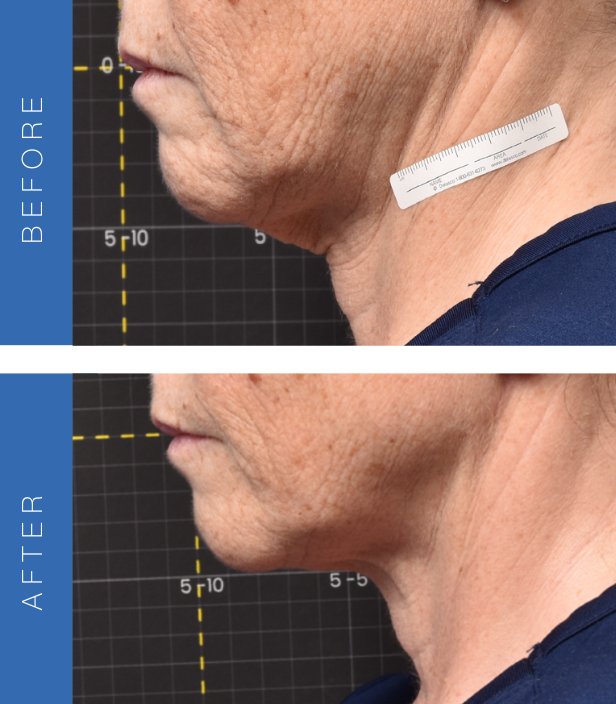
Depth is one of the most frequently discussed differences between HIFU and Sofwave.
Many HIFU platforms can treat more than one depth, depending on the cartridges used. Sofwave is designed to focus energy within the mid-dermis at around 1.5 mm.
It is tempting to assume that deeper treatment must create a stronger lift. That is too simplistic.
The ideal depth depends on:
A person with a naturally slim face and limited facial fat may have different priorities from someone with heavier lower-face tissue. Similarly, a patient mainly concerned about crepey skin may require a different approach from someone expecting a dramatic jawline lift.
Treatment should therefore be selected according to the tissue being targeted, not the idea that maximum depth produces maximum benefit.
Unwanted facial volume change is one of the most common concerns raised by people researching HIFU.
Some aesthetic ultrasound devices are capable of delivering energy at depths close to subcutaneous tissue. Whether this creates an undesirable effect depends on the device, cartridge, settings, treatment pattern, anatomy, and operator technique.
It would be inaccurate to say that every HIFU treatment causes facial fat loss. It would also be unwise to dismiss the concern entirely.
Before undergoing treatment, ask:
Sofwave’s specified treatment depth is within the mid-dermis, rather than the deeper fat layer. This may make it appealing to people who want to improve firmness while preserving their existing facial volume. However, no responsible practitioner should describe any medical aesthetic procedure as completely risk-free.
There is no high-quality evidence proving that one treatment is universally superior for every patient.
HIFU research supports its use for facial and neck rejuvenation, but studies use different machines, settings, assessment methods and follow-up periods. This makes it difficult to apply one conclusion to every commercial HIFU device.
Sofwave is designed to stimulate collagen in the mid-dermis and may improve firmness, texture and mild to moderate laxity. The result is expected to be gradual and natural-looking rather than equivalent to a surgical lift.
The likely outcome depends on the problem being treated.
A consultation should also establish whether ultrasound is the right category of treatment at all. Volume loss, muscle activity, skin texture and advanced laxity cannot necessarily be addressed by one tightening device.
Sofwave may be worth discussing when a person has a lean face and wants to avoid unnecessary treatment of deeper tissue.
Because Sofwave focuses energy within the mid-dermis, it is not designed as a fat-reduction treatment. This distinction can be important for patients who already have facial hollowing, reduced cheek volume or age-related volume loss.
However, a thin face does not automatically make someone suitable for Sofwave. The clinician still needs to determine:
Tightening skin cannot replace lost structural volume, and adding volume cannot correct every form of laxity. Sometimes the most appropriate answer is a staged or combination plan rather than choosing between two devices.
Both HIFU and Sofwave can cause discomfort.
People may describe sensations such as:
Pain varies according to the treatment area, device, energy level, depth and individual sensitivity. It should not be assumed that either treatment is entirely painless.
Sofwave uses integrated cooling to protect the surface of the skin, but the delivery of heat within the dermis can still be uncomfortable.
At Skin By Doctor Y, comfort options are discussed before Sofwave treatment. Where medically appropriate, Dr Yussouf may offer a nerve block in addition to other comfort measures.
A clinic should explain its pain-management approach before you commit, rather than minimising discomfort as part of the sales process.
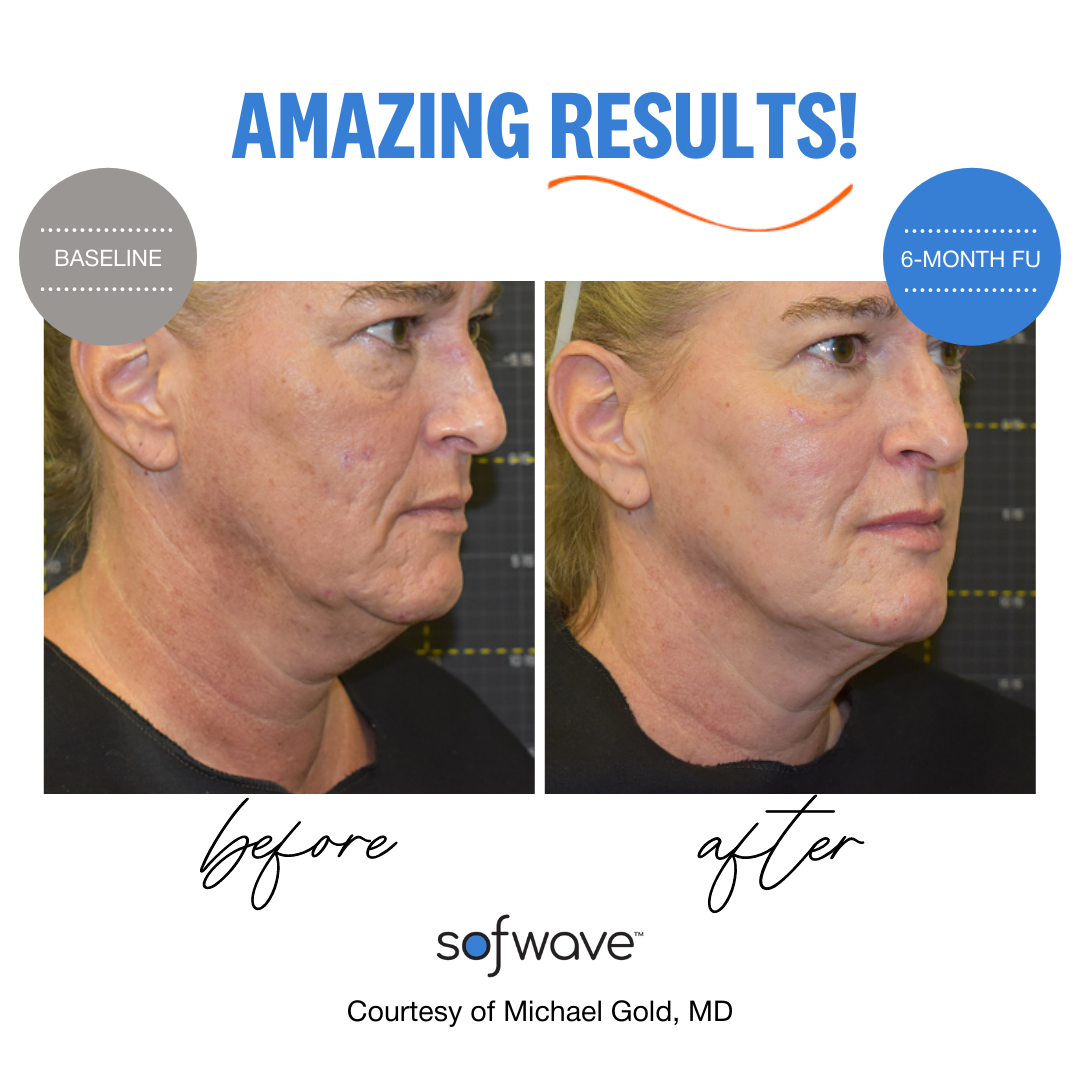
Both treatments are generally chosen because they do not involve incisions or deliberate removal of the skin surface.
Temporary effects can include:
Most people can return to normal activities relatively quickly, although individual recovery varies. Published HIFU literature has reported effects including redness, swelling, bruising and discomfort, with many resolving without lasting problems.
Sofwave also generally involves limited downtime because the skin surface remains intact. However, mild redness, swelling or tenderness may still occur.
Ask the practitioner what is normal, what is not normal and how to contact the clinic if you are concerned after treatment.
Neither treatment should be judged immediately after the appointment.
Ultrasound skin tightening relies on a biological response that develops as collagen is remodelled. This means improvement is usually progressive over weeks and months.
With either approach, outcomes may be affected by:
A photograph taken immediately after treatment may show temporary swelling or a short-lived tightening effect. It does not necessarily represent the final result.
For Sofwave, Skin By Doctor Y advises patients that lifting and tightening typically develop gradually, with optimal improvement commonly assessed at around 8 to 12 weeks. Individual outcomes vary.
There is no reliable universal number.
Some Sofwave patients may be satisfied after one session, while others with greater laxity may be advised to consider further treatment after their response has been assessed.
HIFU treatment schedules vary widely because devices and protocols differ. Be cautious when online sources make firm claims about the exact number of sessions needed without naming the platform or considering the patient.
A sensible treatment plan should explain:
More sessions do not automatically mean a better result. Repeated energy-based treatments should be medically justified.
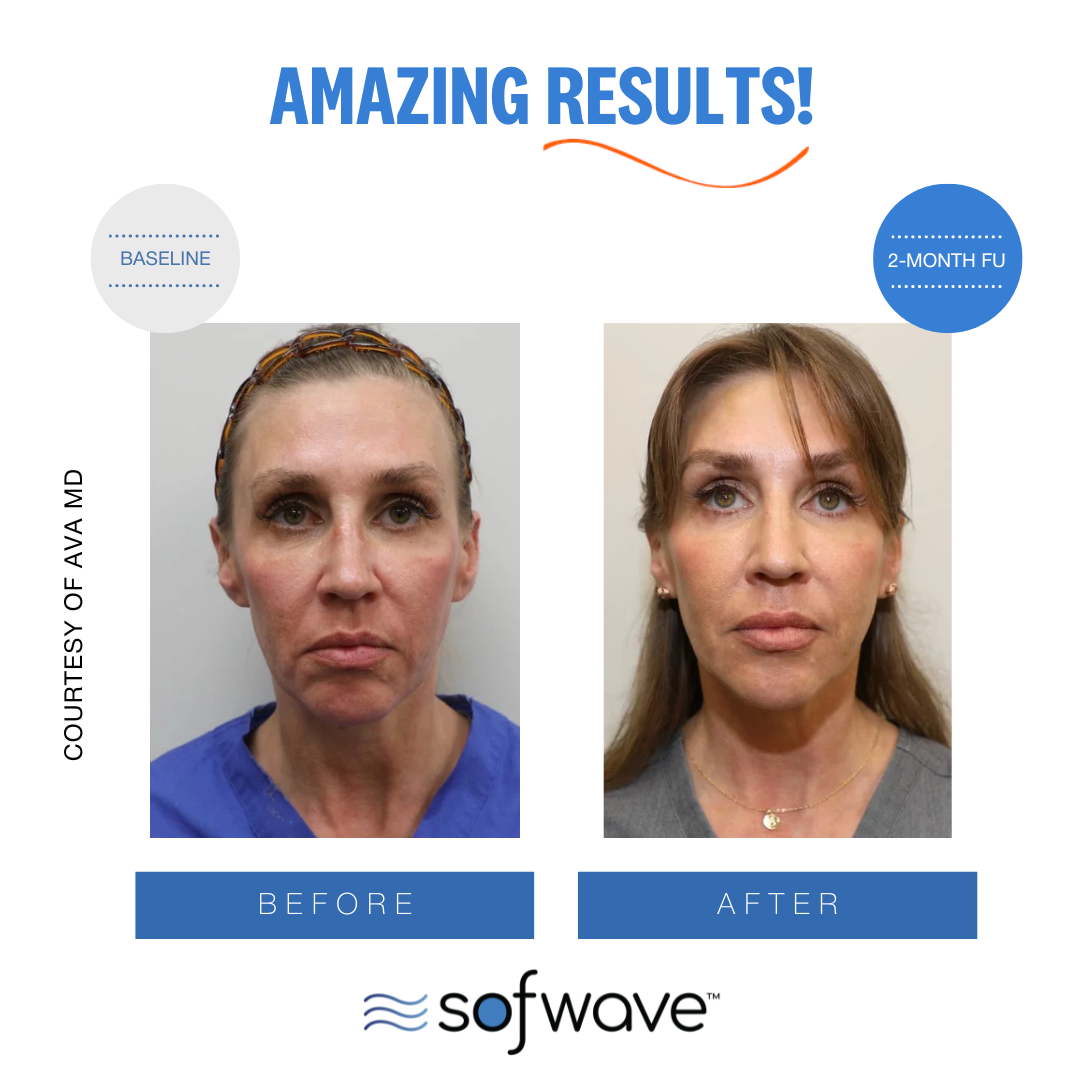
No. HIFU and Sofwave are not replacements for surgery.
They may improve mild to moderate laxity, but they cannot remove substantial excess skin or reproduce the structural repositioning achieved through a surgical facelift.
You may need a surgical opinion when:
A trustworthy clinician should be willing to say when a non-surgical treatment is unlikely to produce enough improvement.
A softer jawline can result from skin laxity, facial fat, muscle position, bone structure, volume loss or a combination of factors. Ultrasound may not address every cause.
Ask for the exact manufacturer and model. This is especially important with HIFU, where quality and treatment capabilities vary.
The practitioner should be able to explain the intended target and why it suits your anatomy.
Look for a clear explanation of likely improvement and limitations, rather than promises of a “non-surgical facelift”.
Every treatment has potential side effects and complications. Ask how these are reduced and managed.
Ask about numbing, cooling, nerve blocks and what patients usually feel during the procedure.
A medical consultation should include alternatives, including the option not to treat.
Lower cost does not tell you which machine is being used, who is performing the treatment or whether the protocol is suitable.
HIFU is a broad category. Device quality, energy delivery and practitioner experience can differ substantially.
The appropriate tissue depth depends on your anatomy and concern. Unnecessary depth does not guarantee a better result.
Non-invasive skin tightening generally creates gradual and comparatively subtle improvement.
If facial hollowing is already present, a treatment plan focused only on tightening may not address the overall problem.
A treatment should not be recommended solely from a social-media photograph or brief online message.
The smarter choice is the treatment that has been selected for your anatomy, rather than the one with the strongest marketing.
Sofwave may be particularly relevant if you are concerned about early laxity, reduced firmness or skin texture and want to focus treatment within the mid-dermis while preserving facial volume.
HIFU may have a role where deeper focused treatment is considered appropriate, but the exact machine, settings and practitioner experience must be taken into account.
The decision should consider:
At Skin By Doctor Y, Dr Summya Yussouf has experience of working with both treatment approaches and has chosen to offer Sofwave within her Hampstead clinic. This reflects the clinic’s emphasis on skin quality, natural-looking rejuvenation and personalised treatment planning, but it does not mean that every patient is automatically suitable.
No. Both use ultrasound energy, but Sofwave is a specific branded platform designed to treat the mid-dermis at approximately 1.5 mm. HIFU is a broader category that can include devices operating at different depths and settings.
Not necessarily. Sofwave may help improve mild to moderate skin laxity around the jawline, while some HIFU devices can target deeper tissue. The better option depends on what is causing the loss of definition and whether deeper treatment is appropriate.
Sofwave is designed to deliver energy within the mid-dermis rather than target facial fat. This is different from treatments intended to reduce fat. However, suitability and potential risks should still be discussed with a qualified practitioner.
It is not possible to say that one treatment is universally safer in every situation. Safety depends on the device, treatment settings, patient selection, anatomy and practitioner expertise. Sofwave’s fixed mid-dermal targeting and integrated cooling are relevant safety features, but no aesthetic procedure is entirely risk-free.
Both treatments usually involve limited downtime. Temporary redness, swelling or tenderness can occur after either procedure, and individual recovery varies.
They may not provide sufficient improvement for severe laxity. People seeking a substantial lift may need to discuss surgical options or accept that non-surgical results will be more limited.
Choosing between HIFU and Sofwave should involve more than comparing promotional claims. A proper consultation should identify the cause of your concern, assess your skin and facial volume, explain realistic results and discuss the advantages and limitations of each option.
If you are considering non-surgical skin tightening, you can review the Sofwave treatment information and pricing or book a callback to discuss your concerns.
