
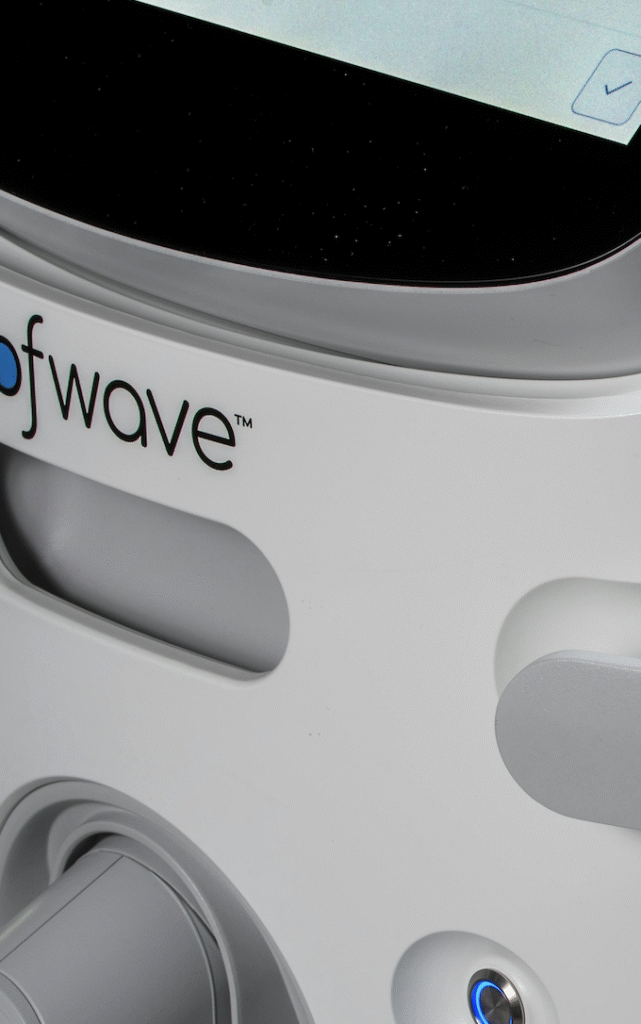
Quick answer: Sofwave and HIFU both use ultrasound to stimulate collagen and tighten skin, but they work at different depths. Sofwave heats the mid-dermis (about 1.5 mm) and leaves facial fat untouched, so it suits people who want natural-looking firming without volume loss. Some HIFU devices reach deeper tissue, which can give more lift in the right hands but makes results more dependent on the operator. Neither is right for everyone.
Non-invasive skin tightening is fast becoming one of the most requested treatments in aesthetic clinics. Having worked in clinics across London, including Knightsbridge and Victoria, before opening my own skin clinic in Hampstead, I have seen demand grow as clients look for subtle, natural lifting with very little downtime.
Two devices that are often compared are HIFU and Sofwave. I have worked with both, and I chose Sofwave for my own clinic. This guide explains the real differences between them, so you can ask better questions, spot unrealistic claims and make an informed decision.
Sofwave vs HIFU at a glance
| HIFU | Sofwave | |
|---|---|---|
| Technology | High-intensity focused ultrasound | Parallel ultrasound beams |
| Treatment depth | Varies by device and cartridge | About 1.5 mm, in the mid-dermis |
| Effect on facial fat | Possible with deeper settings | Designed not to target fat |
| Skin surface | Usually stays intact | Stays intact, with built-in cooling |
| Comfort | Varies with device, depth and settings | Heat felt during pulses; numbing used |
| Downtime | Usually limited, but varies | Usually minimal |
| Results | Develop gradually | Develop gradually over 8–12 weeks |
| Often considered for | Deeper tissue tightening | Mild to moderate laxity and skin quality |
| Replaces a facelift? | No | No |
What is HIFU skin tightening?
HIFU stands for High-Intensity Focused Ultrasound. “High-intensity” means the energy is strong enough to produce a biological effect, and “focused” means it is concentrated on a specific tissue layer. The targeted tissue absorbs the energy and heats up, creating tiny controlled points of damage. As the body repairs these areas, it lays down fresh collagen and the tissue tightens. If you have ever noticed how the skin around a healing cut feels tight, this is the effect these treatments mimic.
It is important to know that HIFU is a category, not one treatment. Two clinics advertising HIFU may be using different machines, cartridges, depths, energy settings and techniques. That is why comparing HIFU by price alone can be misleading.
What is Sofwave skin tightening?
Sofwave also uses ultrasound, but in a different way. Its parallel beams gently heat the mid-dermis, the middle layer of the skin where collagen and elastin live, at a depth of around 1.5 mm. Built-in cooling protects the skin surface. The aim is to stimulate your skin’s own collagen without damaging the surface or the fat and muscle beneath.
Sofwave is commonly used for mild to moderate laxity, early jowls, a softening jawline, fine lines, crepey skin and loss of firmness in the face and neck. You can read about the areas we treat on our Sofwave treatment page.
HIFU vs Sofwave: the key difference is depth
HIFU can work at several depths, and deeper energy can be useful for lifting. But it can also affect surrounding tissue such as fat and muscle. Sofwave only reaches the mid-dermis, so it does not affect your natural facial volume.
Because of this, HIFU results depend heavily on the operator. In inexperienced hands, clients can be left with facial volume loss. Because Sofwave’s energy is localised, results tend to be more predictable and natural-looking.
Deeper is not automatically better. The right depth depends on your facial anatomy, skin thickness, fat distribution, the area being treated and the result you want.
Can HIFU cause facial fat loss?
This is one of the most common worries people raise. Some HIFU devices can deliver energy close to the fat layer, and whether this causes unwanted volume change depends on the device, settings, anatomy and technique. Not every HIFU treatment causes fat loss, but the concern is real. Before any HIFU treatment, ask:
- Which exact device and cartridges will be used?
- Which depths are planned, and why do they suit my face?
- How will naturally lean or hollow areas be protected?
- How much experience does the practitioner have with this device?
Which gives better lifting and tightening?
There is no high-quality evidence that one is better for every patient. The likely outcome depends on the problem being treated.
Sofwave may be more suitable if:
- your main concern is mild or moderate laxity
- you want to improve skin firmness and texture
- keeping your facial volume is a priority
- you prefer gradual, subtle rejuvenation
- you want minimal interruption to daily life
HIFU may be considered if:
- a deeper tissue level genuinely needs treating
- the practitioner can explain why their device and settings suit your anatomy
- you understand the extra risks that come with deeper treatment
If your laxity is more advanced, Sofwave will give tightening without volume loss, but it will not create a sharply sculpted jawline. Being honest about this at consultation matters.
Is Sofwave better for thin faces?
Sofwave is worth discussing if you have a lean face and want to avoid treating deeper tissue, because it is not designed to reduce fat. A thin face does not automatically make you suitable, though. Tightening cannot replace lost volume, so sometimes the best plan combines Sofwave with treatments such as skin boosters or collagen stimulators.
Not sure which is right for you?
Book a consultation with Dr Y in Hampstead for an honest assessment.
Book a consultation Sofwave prices & areasHow I help clients decide
Age. Sofwave often suits people from their late 20s to their 50s who are noticing early laxity and want to maintain firmness. HIFU may be considered in some older patients with more advanced laxity. Skin condition matters more than age.
Skin laxity. For mild to moderate laxity, Sofwave typically gives natural-looking tightening and smoothing. HIFU may be appropriate for moderate to severe laxity, but deeper is not always better if keeping volume is a priority.
Treatment area. Sofwave works well on the face, jawline, neck and delicate areas such as under the eyes. HIFU is sometimes used for deeper lifting of the lower face and neck but can be less predictable in thinner areas.
Desired result. If you want to look refreshed rather than different, Sofwave is often the better fit. HIFU may appeal if you want a stronger lift and accept that results can vary more.
Downtime. Sofwave involves minimal downtime, so most people go straight back to normal activities. HIFU can leave temporary tenderness, which some people find limiting.
Which is more painful?
Both can be uncomfortable, with sensations such as heat, tingling or sharp pulses, especially over bony areas. Sofwave’s cooling protects the skin surface, but the heat in the dermis can still be felt. At Skin by Dr Y I apply a numbing cream beforehand, and for more sensitive patients I can offer a nerve block.
Downtime, results and number of sessions
Both treatments leave the skin surface intact, so downtime is usually limited. Temporary redness, swelling or tenderness can occur and usually settles within 48 hours after Sofwave.
Neither should be judged straight after treatment. Results build as new collagen forms. With Sofwave, skin often feels smoother early on, with lifting and tightening developing over 8 to 12 weeks. Many clients are happy after one session, while those with more laxity may benefit from a repeat at 4 to 6 months.
Does either replace a facelift?
No. HIFU and Sofwave can improve mild to moderate laxity, but they cannot remove significant excess skin or match a surgical lift. A trustworthy clinician will tell you when a non-surgical treatment is unlikely to give enough improvement.
Sofwave cost in London
At Skin by Dr Y in Hampstead, Sofwave starts from £800. Popular treatments include:
- Brow lift: £900
- Jawline lift: £1,200
- Full face: £2,000
- Full face and neck: £2,300
See every area and price on our Sofwave in Hampstead page. When comparing prices with HIFU, check which device is being used and who is doing the treatment, as these vary widely.
Common mistakes when comparing HIFU and Sofwave
- Choosing by price alone. A lower price tells you nothing about the machine or the practitioner.
- Assuming all HIFU is the same. Devices and protocols differ a lot.
- Believing deeper is always better. The right depth depends on your anatomy.
- Expecting a surgical result. Non-invasive tightening is gradual and subtle.
- Ignoring existing volume loss. Tightening alone will not fix hollowing.
- Booking without an assessment. A treatment should never be chosen from a social media photo.
Why I chose Sofwave for my Hampstead clinic
My approach at Skin by Dr Y is to protect and enhance your natural features, not change them. I focus on treatments that refresh the face, improve skin quality and support the skin as it ages, so you look like the best version of yourself, not a different version.
Sofwave fits that approach, which is why it is the skin tightening treatment I offer. That does not mean it suits everyone. A good consultation should look at what is actually causing your concern, explain realistic results and include the option not to treat.
Considering Sofwave in Hampstead?
Every consultation and treatment is carried out personally by Dr Y.
Book a consultation Sofwave prices & areasFrequently asked questions about Sofwave vs HIFU
Is Sofwave better than HIFU?
Neither is better for everyone. Sofwave is often preferred for predictable, natural-looking tightening without volume loss, because it treats the mid-dermis at around 1.5 mm. Some HIFU devices can treat deeper tissue. The right choice depends on your skin, facial volume, degree of laxity and goals, so a consultation is the best place to start.
Is Sofwave the same as HIFU?
No. Both use ultrasound energy, but Sofwave is a specific platform that uses parallel ultrasound beams to heat the mid-dermis, with built-in cooling to protect the skin surface. HIFU is a broad category of devices that can work at several depths and settings.
Does Sofwave cause facial fat loss?
Sofwave is designed to work within the mid-dermis rather than the fat layer, which is why it is popular with people who want tightening without losing facial volume. As with any medical treatment, suitability and risks should be discussed with a qualified practitioner.
Can HIFU cause facial fat loss?
Some HIFU devices can deliver energy close to the fat layer. Whether this causes unwanted volume change depends on the device, cartridge depth, settings, your anatomy and the practitioner’s technique. Ask exactly which device and depths will be used before you book.
Which is better for the jawline, Sofwave or HIFU?
Sofwave can help mild to moderate laxity along the jawline and under the chin. Some HIFU devices target deeper tissue. The better option depends on what is causing the loss of definition, which is why a facial assessment matters.
Is Sofwave painful?
Sofwave can be uncomfortable during the pulses. At Skin by Dr Y a numbing cream is applied beforehand, and for more sensitive patients a nerve block can be offered. Mild redness and swelling usually settle within 48 hours.
What is the downtime after Sofwave or HIFU?
Both usually involve limited downtime because the skin surface stays intact. Temporary redness, swelling or tenderness can occur. After Sofwave most people return to normal activities straight away and can wear make-up the same day.
When will I see results?
Results from both build gradually as new collagen forms. With Sofwave, skin often feels smoother early on, with lifting and tightening developing over 8 to 12 weeks and continuing for several months. Individual results vary.
How many Sofwave sessions will I need?
Many clients are happy after one treatment. Those with more laxity may benefit from a repeat session at 4 to 6 months.
How much does Sofwave cost in London?
At Skin by Dr Y in Hampstead, Sofwave starts from £800. A brow lift is £900, a jawline lift £1,200 and a full face £2,000. See the full price list on our Sofwave page.
Can Sofwave or HIFU replace a facelift?
No. Both can improve mild to moderate laxity, but neither can remove significant excess skin or match a surgical lift. A good clinician will tell you if surgery would be more appropriate.
